What is the best cookware material for everyday cooking? The honest answer depends on what lands in your pan: eggs, seared chicken, tomato sauce, or last night’s leftovers. Stainless steel handles browning and acidic sauces well, but food can stick when the pan is too cool. Cast iron holds heat beautifully for crisp potatoes, though it is heavy and needs thoughtful care. Nonstick makes delicate eggs easier, but its coating will not last forever. There is no perfect pan. A little inconvenient, perhaps—but useful to admit.
Alton Brown, chef and food-science presenter, is known for the line, “The only unitasker allowed in my kitchen is a fire extinguisher.” That idea offers a practical lens for choosing cookware: consider how often a pan earns its space, not just how impressive it looks. A sturdy stainless-steel skillet may move from weekday vegetables to pan sauce; a seasoned cast-iron pan may excel at a steak but feel cumbersome on a rushed morning. Handle comfort matters, too. So does the weight when the pan is full. This guide compares common cookware materials by heat performance, upkeep, versatility, and everyday cost. It will help you answer what is the best cookware material for everyday cooking for your kitchen—not someone else’s. A small caveat: cooking habits change, and one pan rarely does everything equally well.
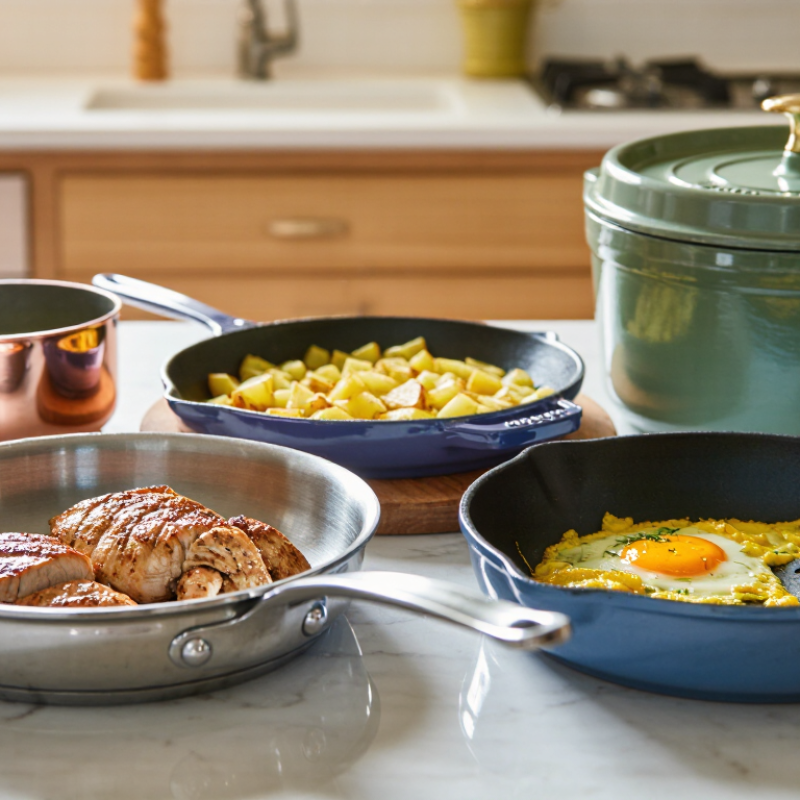
Everyday cooking is less about finding one perfect material and more about choosing a pan that suits your routine. Heat control matters when eggs need gentle warmth or vegetables need a quick sear. Aluminum heats quickly, while thick cast iron holds heat well but takes longer to warm. Stainless steel can handle varied tasks, though food may stick if the pan is too cool or dry. Small details count.
Weight and care shape how often cookware gets used. A heavy skillet can feel steady on the stove, but awkward when lifted with one hand or washed in a crowded sink. Stainless steel usually tolerates scrubbing, while cast iron needs drying and a light oiling to limit rust. Coated pans are convenient for delicate foods and quick cleanup, but their surfaces can wear; use gentle utensils and follow the maker’s care instructions. That extra care can feel easy at first, then tiresome on a busy weeknight.
Budget should include replacement, not only the price at checkout. A modest, sturdy pan may serve better than a costly set with pieces you rarely reach for. I’d weigh a pan in the store if possible, and check whether its handle feels secure. It is not a perfect test, but neither is shopping by appearance alone.
At 20°C, copper conducts heat at about 401 W/m·K, aluminum at 237, and steel at 16. These figures describe how readily heat travels through each material, not how a complete pan performs. Copper spreads heat quickly, which can help limit hot spots near a burner. Aluminum also responds quickly and is relatively light. Steel conducts heat less efficiently, so a steel pan may heat unevenly unless its base includes a more conductive layer.
Tips: For a quick sear, preheat the pan gradually and watch how food browns across its surface. Small detail. A thin base may react faster, but can also lose heat quickly when cold ingredients go in.
I would not choose cookware by conductivity alone; that shortcut misses thickness, construction, and heat retention. A layered pan can combine steel’s durable cooking surface with an aluminum core. Burner size matters, too: a small flame under a wide pan can leave the edges cooler. These numbers are useful, but they do not replace observing how a particular pan behaves on your stove.
Copper and aluminum conduct heat much faster than steel, which can help cookware respond more quickly to changes in heat. Values are typical reference figures; actual conductivity varies by alloy and grade.
Cookware construction often matters more than the material name stamped on the box. Fully clad stainless steel sandwiches an aluminum or copper core between steel layers, helping heat travel across the base and up the sides. That can reduce hot spots when browning onions or simmering tomato sauce. A thick, bonded base may work well too, but heat can feel less even along the walls. More layers are not automatically better.
Coated pans trade some durability for easy release and cleanup. Their surface can wear faster when scratched, overheated, or scrubbed with abrasive pads. Use moderate heat and utensils that won’t cut into the coating. Still, coatings do not last forever. Replacing a pan is part of the trade-off, though the timing varies with care and use.
For everyday cooking, inspect the details: Is the core bonded through the sides or only under the base? Does the pan sit flat, and do the handles feel secure when full? Stainless steel tolerates frequent use, but food may stick if the pan is too cool or dry. I used to treat that as a flaw in the pan. Sometimes, it is simply technique. A small mismatch between cookware and routine can matter more than extra layers.
The best cookware material depends on how you cook, but food-contact safety deserves equal attention. A material’s name alone does not prove that a pan is suitable for every food or temperature. FDA requirements concern substances that may contact food, including materials used in cookware. Compliance depends on the substance, its intended use, and whether components can migrate into food under those conditions.
The FDA does not simply approve every finished pan as universally safe. That distinction can feel annoyingly technical, but it matters.
NSF/ANSI 51 sets requirements for materials and finishes used in commercial food equipment. It can help buyers assess relevant food-contact materials, but it is not a blanket certification for all household cookware. Check what a certification covers, rather than relying on a logo or a broad safety claim. Look for clear instructions on temperature limits, cleaning, and suitable foods. Details matter.
At home, inspect pans regularly. A chipped coating, rough corrosion, or a loose handle deserves attention. Follow the maker’s care instructions, especially when using high heat or acidic ingredients such as tomatoes. I still find product claims confusing at times. When details are missing, ask the seller or manufacturer for documentation about intended food contact and use.
Stainless steel
Stainless steel handles everyday jobs that need steady heat and browning. Use it for searing chicken, sautéing vegetables, or simmering tomato sauce. A little oil and a properly heated pan help reduce sticking. It is durable, but cleanup can take extra scrubbing when food catches. For quick weeknight meals, that matters.
Cast iron
Cast iron suits foods that benefit from strong heat, such as cornbread, crisp-edged potatoes, or a thick steak. It holds heat well, though the pan can feel heavy and takes time to warm. Dry it after washing to limit rust, and apply a thin coat of oil when needed. It is useful, not effortless.
Nonstick cookware
Nonstick cookware makes eggs, pancakes, and delicate fish easier to turn, often with less oil. Use moderate heat and soft utensils to protect the coating. It may need replacing sooner than steel or cast iron, so it is not ideal for every task.
Tips:
Match the pan to dinner, not an idealized kitchen. Keep one reliable nonstick pan for delicate foods, and choose steel or cast iron for browning. If cleanup changes your plans, reconsider the pan.
It depends on your routine. Aluminum heats quickly, while cast iron holds heat but takes longer to warm.
Lift it in the store if possible. A heavy skillet may feel steady but awkward over a crowded sink.
Look for a bonded core that reaches the sides, not just the base. More layers are not automatically better.
Heat the pan before adding food, and avoid starting with a cool, dry surface. Technique matters too.
Use moderate heat and gentle utensils. Avoid abrasive pads, and follow the care instructions.
No. Their surfaces can wear, especially after scratches or overheating. Replacement timing varies.
FDA requirements concern food-contact substances and their intended use. NSF/ANSI 51 covers materials and finishes used in commercial food equipment.
Check for chipped coating, rough corrosion, or a loose handle. Not every product claim is clear, so ask for use and care details when needed.
Choosing the right cookware for everyday cooking depends on more than heat performance. Consider how quickly a pan responds to temperature changes, how heavy it is to lift, how much care it needs, and what fits your budget. At 20°C, copper conducts heat at about 401 W/m·K, aluminum at 237 W/m·K, and steel at 16 W/m·K. These differences help explain why layered cookware often combines a responsive core with a durable cooking surface.
Construction and maintenance matter, too: clad layers can balance heat distribution and strength, while coatings may make cooking and cleanup easier but can wear over time. For food-contact safety, check that cookware is intended for that use and consider relevant FDA requirements and NSF/ANSI 51 standards. Stainless steel is a versatile choice for browning and everyday durability; cast iron suits steady heat when its weight and upkeep are manageable; and nonstick can be convenient for delicate foods and quick cleanup. Ultimately, what is the best cookware material for everyday cooking depends on your tasks and preferences.

Flair Kitchen