How long should quality cookware last? There is no single number that fits every pan. A heavy stainless-steel skillet may serve a household for decades, while a nonstick pan often needs replacing sooner as its coating wears. The difference depends on materials, construction, cooking habits, and care. A pan used daily over high heat faces a different life from one used gently on weekends.
Chef and food-science educator Alton Brown is widely quoted as saying, “The only unitasker allowed in my kitchen is a fire extinguisher.” That idea favors practical, versatile tools, but usefulness alone does not guarantee a long life. A warped base that rocks on the burner, a loose handle, or a scratched cooking surface deserves attention. Small signs matter. So does the way a pan is cleaned and stored.
This guide looks at how long should quality cookware last across common materials, from stainless steel and cast iron to coated aluminum. It will explain which wear is cosmetic and which may affect cooking or safe use. A dull finish, for example, is not necessarily a failure; a flaking coating is a different concern. There is no perfect lifespan chart, and even careful owners can damage a pan. That part is easy to overlook. By matching realistic expectations with simple care habits, shoppers can make better decisions before buying—and know when a trusted pan has reached the end of its useful life.
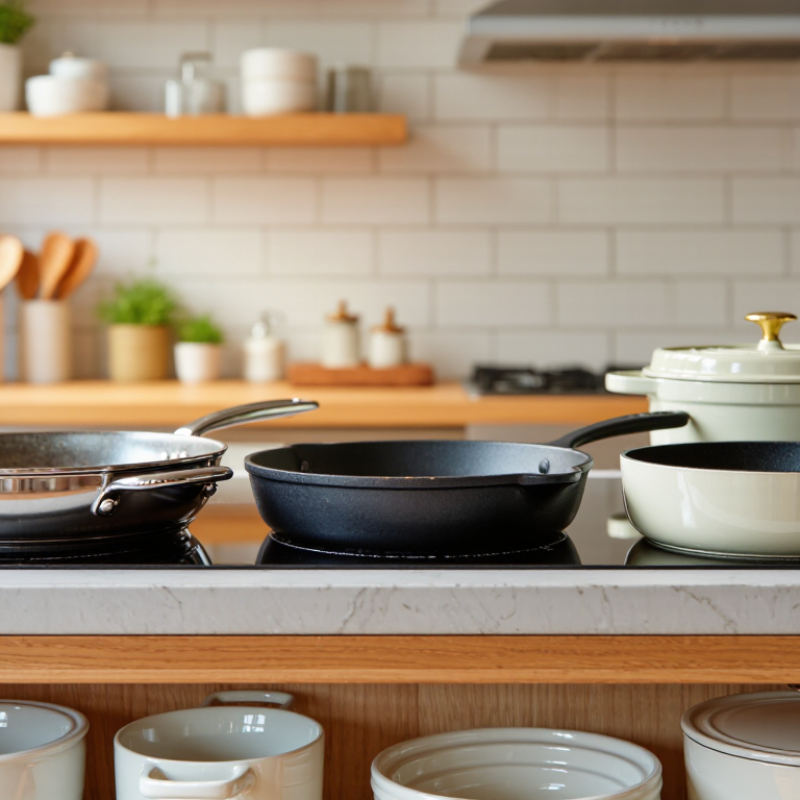
Factors That Determine the Lifespan of Quality Cookware
A quality pan’s lifespan depends less on its price than on its materials, construction, and daily care. Stainless steel tolerates frequent scrubbing, while thin metal can warp when heated unevenly. A thick, flat base helps distribute heat and resist distortion. Riveted handles and tight-fitting lids also matter; a loose handle can make an otherwise sound pan unusable. Small details count.
Industry figures offer context, not a guaranteed lifespan. The International Stainless Steel Forum reported 58.4 million tonnes of stainless steel production worldwide in 2023, reflecting the material’s broad use, not how long cookware lasts. The Aluminum Association reports that nearly 75% of all aluminum ever produced remains in use. That figure describes aluminum recycling and continued use across many applications; it is not a cookware durability test. No universal industry dataset can promise that every pan will last a set number of years.
Care changes the outcome. Avoid sudden temperature shifts, which can stress a hot pan, and use utensils suited to its surface. Abrasive cleaning may gradually damage a coating, while overheating can shorten its useful life. Look for persistent warping, flaking, or a handle that will not stay secure. I still find it easy to judge a pan by its appearance alone; that can be misleading. A clean surface does not always mean reliable performance.
How Long Should Quality Cookware Last?
Estimated service life varies by cookware material and how it is used and maintained.
These are indicative estimates, not guaranteed lifespans. Coated cookware may need replacing when its surface deteriorates; uncoated stainless steel, carbon steel, and cast iron can last much longer with suitable care. Heat, cleaning methods, storage, and frequency of use all affect longevity.
Expected Lifespan of Cookware by Material and Construction
Cookware lifespan depends on material, construction, and daily habits.
Material sets a range, not a promise. Stainless steel pans with thick, securely bonded bases can serve for decades. They resist rust and tolerate frequent cooking, though handles may loosen and surfaces can discolor. Cast iron can last for generations when kept dry and maintained with a thin layer of oil. Carbon steel has similar potential, but its seasoning may need regular repair.
Coated cookware usually has a shorter working life.
A nonstick pan may perform well for a few years, but repeated high heat, metal utensils, and abrasive cleaning can wear its coating sooner. Coating wears. Enameled cast iron can last many years, yet chips or cracks may limit its safe, practical use. Check the cooking surface and rim for damage, not just the pan’s age.
Construction matters, too.
A firmly attached handle and a base that stays flat often matter more than a heavy feel in the shop. A loose rivet or a warped base can end a pan’s useful life early. Follow the maker’s care instructions, and let hot cookware cool before washing. Honestly, lifespan charts can sound more exact than real kitchens allow. A pan used gently twice a week may outlast one used hard every day.
Signs That Cookware Should Be Repaired or Replaced
A pan does not need replacing just because its surface looks worn. Check what has changed. A warped base may wobble on a flat hob, leaving a visible gap and heating food unevenly. Loose handles, cracked welds, and deep corrosion are more serious; stop using the pan if it feels unstable or pieces may detach. Some handles can be repaired with compatible parts, but a cracked body usually cannot be restored safely. Not every mark matters.
For nonstick cookware, peeling or flaking coating is a clear reason to replace the pan. Small scratches are harder to judge, and I would not treat every faint line as proof of danger. ASTM International’s D3359 coating-adhesion test uses a 0B–5B rating scale, from poor to strong adhesion. It is a laboratory test, not a home test or a cookware-lifespan guarantee. Still, visible lifting suggests the coating has lost its bond. For stainless steel, pitting that remains after cleaning, a separating base, or a handle that keeps loosening deserves attention. Check the maker’s repair guidance where available; sometimes replacement is the safer, less frustrating choice.
Care Practices That Help Cookware Last Longer
China Top Cookware How Long Should Quality Cookware Last?
Care Practices That Help Cookware Last Longer
Quality cookware can last for years, but no single lifespan fits every pan. Materials, construction, heat levels, and daily care all matter. Stainless steel may remain useful for decades when its base stays flat and its handles remain secure. Nonstick coatings usually need gentler treatment and replacement when they peel or become badly scratched. Check the maker’s care instructions; oven limits and cleaning methods vary. A pan that looks fine may still heat unevenly.
Let cookware cool before washing. Sudden temperature changes can warp some pans, especially thin ones. Use warm water, mild detergent, and a soft sponge for routine cleaning. For stuck-on food, soak the pan instead of scraping hard. Dry it fully before stacking to help prevent water spots and rust on susceptible materials. I used to stack pans carelessly; the scratches were a useful reminder. Avoiding every mark is not realistic, but rough handling adds up.
Tips: Match the utensil to the surface. Use wood or silicone on coated cookware, and store pans with soft protectors between them. Keep heat moderate unless the instructions say otherwise. Check handles and coatings regularly. Replace damaged cookware when its surface is flaking or its structure feels loose.
China Top Cookware: How Long Should Quality Cookware Last? — Care Practices That Help Cookware Last Longer
Note: These are broad estimates, not guarantees. Actual service life depends on cookware construction, frequency of use, heat level, cleaning methods, and the care instructions supplied with the product. Replace cookware with structural damage or a deteriorating cooking surface.
How to Choose Cookware for Long-Term Use
Choosing cookware for long-term use starts with matching materials to daily habits, not chasing a “lifetime” promise. A thick, even base can distribute heat steadily. Firm handles and smooth rivets reduce wobbling and food traps. Inspect the rim and underside: thin edges may warp, while rough seams collect residue. Small details matter.
Material also shapes maintenance. Stainless steel generally handles metal utensils better than coated surfaces, but it can discolor if overheated. Nonstick cookware is convenient, yet its coating wears; use soft utensils and replace a pan if the surface flakes or develops deep scratches.
The Aluminum Association reports that about 75% of all aluminum ever produced remains in use. That signals reuse potential, not a pan’s guaranteed service life. The International Stainless Steel Forum reports an average recycled content of roughly 60% for stainless steel. Recyclability is useful. It does not mean indestructible.
Check whether lids, handles, or other parts can be replaced, and follow the care instructions. I would not assume the heaviest pan is best: lifting a full pot can make daily use awkward. Choose cookware you can handle safely, clean consistently, and store without scraping its cooking surface.
Conclusion
How long should quality cookware last? Its lifespan depends on the material, construction, frequency of use, and care it receives. Stainless steel and well-made cast iron can often serve for many years, while nonstick cookware may need replacing sooner as its coating wears. The way a pan is built, including the thickness of its base and the strength of its handles, also affects how well it stands up to heat and everyday use.
Watch for signs such as loose handles, deep warping, persistent sticking, or damaged coatings to decide whether cookware needs repair or replacement. To extend its useful life, use suitable utensils, avoid sudden temperature changes, clean it according to its material, and store it carefully. When choosing cookware for long-term use, consider durable construction, practical maintenance needs, and whether the material suits your cooking habits.

 Flair Kitchen