Why does food stick to cookware, even when a pan looks clean and well prepared? The answer often involves heat, moisture, surface texture, and the food itself. Egg whites and fish contain proteins that can bond to exposed metal, especially before their surfaces have set. A cold pan, uneven heating, or wet ingredients can make sticking more likely. Stainless steel, cast iron, and nonstick cookware behave differently, so one technique rarely works for every pan. Small details matter.
The good news is that a few practical adjustments can reduce sticking. Preheat the pan gradually, dry ingredients such as scallops or sliced vegetables, and add an appropriate amount of oil or butter. With stainless steel, food may release more easily once it has browned; forcing it too soon can tear the surface. Nonstick pans need gentler heat and utensils that will not scratch their coating. Not magic.
Care matters, too. Burnt residue and damaged coatings can change how food cooks, while excessive heat can be hard on some cookware. Follow the manufacturer’s care guidance, and let pans cool before washing them. Results still vary with burner strength, pan thickness, and recipe. That is easy to overlook. Understanding why does food stick to cookware helps turn a frustrating cleanup into useful feedback: adjust the heat, timing, or preparation, then observe what changes. A perfect release is not guaranteed, but consistent habits usually make cooking easier.
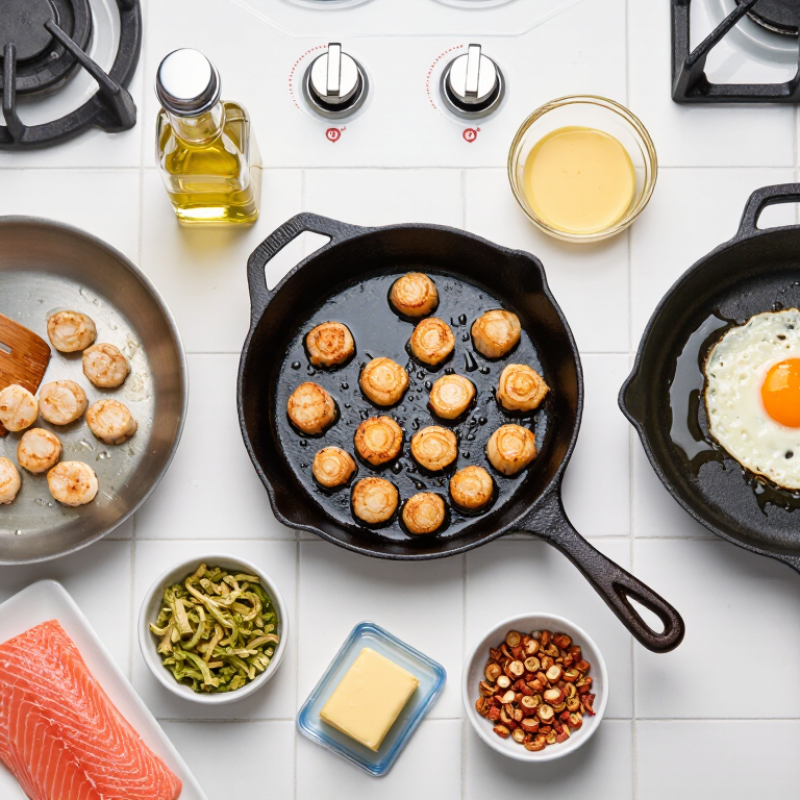
Food sticks when its surface meets a pan before a stable browned layer can form. Proteins in eggs, fish, and meat can bond temporarily with exposed metal, especially while the food is wet. Starches can also turn tacky as they absorb moisture and heat. It is not magic. It is changing surface chemistry.
I used to think a hotter pan always solved sticking. That was an oversimplification: excessive heat can scorch delicate food before it releases. A moderate preheat helps the surface warm evenly; adding food to a cold pan often lets it shed moisture and cling. Pat ingredients dry, then add a thin film of cooking oil. Leave space between pieces, since crowding cools the pan and traps steam. When searing, resist nudging food too soon. A browned crust often releases more easily once it forms. If an edge still grips, give it another moment rather than scraping. Sugary marinades may burn quickly, so lower the heat and watch closely. Results vary with pan material, burner strength, and food thickness; I still sometimes misjudge the heat.
| Cooking situation | Why food sticks | Practical prevention |
|---|---|---|
| Eggs or fish in a stainless-steel pan | Proteins can bond with microscopic irregularities on the pan surface, especially before the food has set. | Preheat the pan over moderate heat, add cooking oil, then add dry food. Let it cook until it releases more easily before turning. |
| Food placed in a cold pan | Food may heat unevenly and spend longer in contact with the surface before a browned exterior forms. | Preheat cookware appropriately for the recipe. Avoid leaving an empty pan heating for too long, particularly on high heat. |
| Wet food in a hot pan | Surface moisture produces steam and can interfere with browning; wet ingredients can also cool the pan when added. | Pat ingredients dry, avoid overcrowding, and cook in batches when needed to maintain steady heat. |
| Food moved too soon | As proteins and sugars brown, a crust develops. Trying to lift the food before that crust forms can tear it and leave residue behind. | Give food time to brown, then test gently with a spatula. Turn it when it releases with little resistance. |
| Pan crowded with ingredients | Crowding traps moisture and lowers the cooking surface temperature, encouraging steaming rather than browning. | Leave space between pieces and cook in smaller batches for more even browning. |
| Food on a worn nonstick surface | Scratches, flaking, or deterioration can reduce the coating’s release performance. | Use non-abrasive utensils and gentle cleaning. Replace cookware if its coating is peeling or substantially damaged, following the manufacturer's care guidance. |
| Food in cast-iron cookware | A rough, poorly maintained, or insufficiently seasoned surface may release food less readily. | Keep the pan clean and dry, maintain its seasoning with a thin layer of suitable oil, and preheat it gradually. |
| Sugary sauces or marinades | Sugars can brown quickly and may burn onto a hot surface, especially over high heat. | Use moderate heat, add sugary sauces later in cooking when practical, and clean the pan before residue becomes difficult to remove. |
Wet proteins can bond with exposed metal as moisture evaporates. Starches may turn tacky as they heat.
Pat meat and fish dry, and let them warm slightly after refrigeration. Small details help.
Preheat it moderately. Add oil when the pan is warm; it should shimmer, not smoke.
Crowded pieces release moisture that cannot escape quickly. The pan cools, and food may steam and stick.
Wait until a browned crust forms. If an edge resists, give it another moment.
Use a thin-edged spatula and avoid scraping hard. I still turn food too early sometimes.
Let the cookware cool, then soak it in warm water. Use a soft sponge, not metal tools.
Use a thermometer. Poultry should reach 165°F; whole cuts of pork, beef, veal, and lamb should reach 145°F, then rest three minutes.
Why does food stick to cookware? Sticking usually happens when ingredients make strong contact with a surface before it is ready, or when heat and moisture are not managed well. The cookware’s material, surface condition, and temperature all play a part: a rough or damaged surface may hold food more readily, while excessive heat can cause proteins and sugars to bond or burn. Food that is wet, moved too soon, or left cooking for too long may also adhere.
A few simple habits can help prevent sticking. Start with clean, dry cookware and prepare ingredients by patting them dry and cutting them evenly. Preheat the pan gradually, add an appropriate amount of cooking fat when needed, and avoid overcrowding. Let food cook long enough to release naturally before turning or moving it, and adjust the heat to suit the ingredient. After cooking, clean cookware with methods appropriate to its surface and avoid tools that may scratch it. These steps can reduce sticking and help cookware perform well over time.

 Flair Kitchen