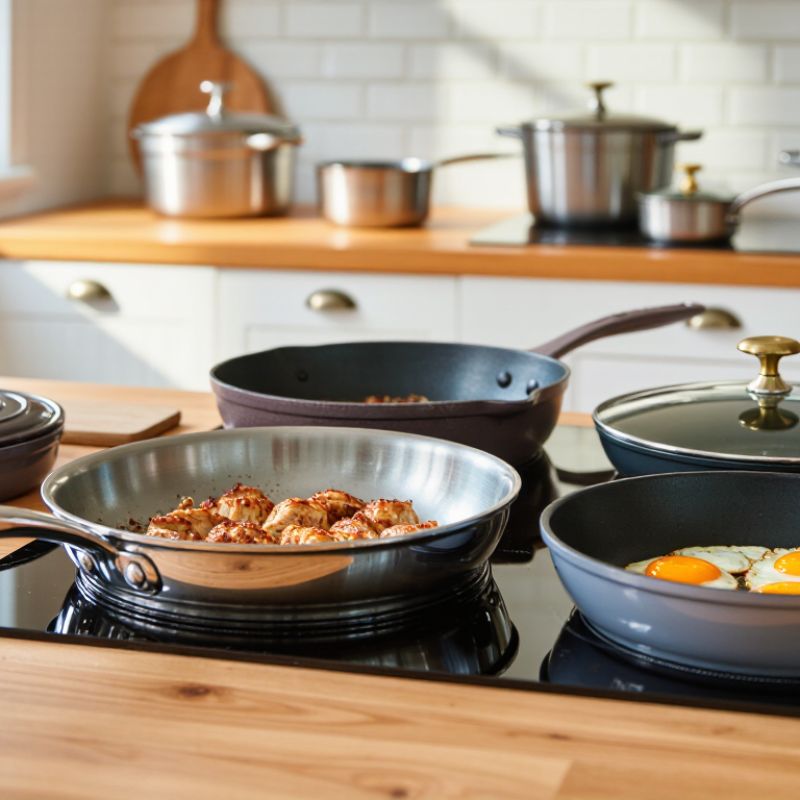
| Stainless Steel |
Durable; handles browning, searing, and acidic foods well. Multi-ply construction can improve heat distribution. |
Usually dishwasher-safe, though hand-washing helps preserve appearance. Preheat and use enough cooking fat to reduce sticking. |
Check that handles stay secure and use oven mitts; metal handles can become hot. Avoid cooking with damaged or badly pitted cookware. |
About $25–$150 per pan; premium multi-ply pans may cost more. |
Cooks seeking versatility, durability, and fond for pan sauces. |
| Cast Iron |
Retains heat well for searing and oven cooking; suitable for stovetop-to-oven recipes. |
Dry promptly after washing and maintain the seasoning with a light coat of oil. Avoid prolonged soaking. |
Heavy and slow to cool; use a dry mitt and stable surface. Acidic foods may react with poorly seasoned iron, especially during long cooking. |
About $20–$80 per pan. |
Cooks who value strong heat retention and do not mind routine upkeep. |
| Carbon Steel |
Responsive to temperature changes and effective for high-heat searing; lighter than cast iron in many designs. |
Season before use when required, dry thoroughly, and apply a thin layer of oil. Avoid leaving wet or acidic foods in the pan. |
Handle can heat up quickly. Use care when lifting, and follow the manufacturer’s instructions for seasoning and oven use. |
About $30–$100 per pan. |
Experienced cooks who want quick heat response and are comfortable seasoning cookware. |
| Nonstick-Coated |
Makes delicate foods such as eggs and fish easier to release; often needs less cooking fat. |
Use low to medium heat and nonmetal utensils. Hand-wash gently; replace the pan if the coating is peeling or substantially damaged. |
Do not preheat an empty pan or overheat it. Follow the product’s temperature limits and ventilation guidance. |
About $20–$80 per pan; lifespan varies with use and care. |
Everyday low-stick cooking and cooks prioritizing easy food release. |
| Enamel-Coated Cast Iron |
Retains heat for braising and slow cooking; the nonreactive enamel surface is suitable for acidic ingredients. |
Clean with nonabrasive tools and avoid sudden temperature changes. Follow care instructions for dishwasher use. |
Heavy to handle. Inspect for chips; discontinue use if interior enamel is damaged and follow the manufacturer’s guidance. |
About $50–$300 per piece. |
Cooks who often braise, simmer, or serve food directly from the pot. |
| Copper (Usually Lined) |
Responds quickly to heat changes, allowing precise temperature control. |
Polishing is optional for performance but needed to maintain a bright exterior. Check lining and care instructions regularly. |
Use cookware with an intact food-safe lining. Unlined copper can react with acidic foods; follow the manufacturer’s instructions if lining is damaged. |
About $100–$400 or more per pan. |
Cooks who prioritize precise heat control and are comfortable with higher cost and upkeep. |
| Hard-Anodized Aluminum |
Generally heats evenly and is relatively lightweight; some versions have a nonstick coating. |
Use nonabrasive cleaning methods. Dishwasher and oven suitability depend on the coating, handle, and product design. |
Follow stated heat limits, especially for coated models. Check that cookware is compatible with the cooktop; many aluminum pans do not work on induction unless designed for it. |
About $30–$150 per pan. |
Cooks seeking a lighter everyday option with responsive heating. |
 Flair Kitchen